
Call to Battle
ModFight World War II battles with guns, vehicles, and maps.
- Security
- Passed
- Privacy
- None found
- Runs on
- Client and server
- Loaders
- Forge, NeoForge
- Minecraft versions
- Up to 1.20.6
Why gradeE
How grades workStrengths
Points lost
- No release in 14 months−20 points
- Many modpacks removed it−10 points
- Releases replaced within 3 days to fix a problem−7 points
- No source code link−7 points
- No public issue tracker−3 points
- Releases in only 6 of the last 24 months−1 point
- Under 5 million downloads−1 point
All 11 criteria
Maintenance
13 points lost14 / 27Last releaseHow long ago the newest file came out, or an existing file was marked as working on a new Minecraft version.14 months ago (30 Aug 2025) 0 / 12Supports popular versionsWhether the project has a file for a Minecraft version that 15% or more of the popular mods updated in the last 6 months also support. A version many modpacks use, like 1.20.1 or 1.21.1, also counts after a release in the last 12 months.1.20.6 on Forge and NeoForge. 77% of the 515 popular Forge mods updated in the last 6 months also have files for 1.20.1. Latest Minecraft: 26.3. 9 / 9Regular releasesIn how many of the last 24 months a new file came out. Full points at 8 months.Releases in 6 of the last 24 months 5 / 6Stability
17 points lost5 / 22Removed from modpacksHow many modpacks removed it in a later version of the pack. We can only see this in modpacks with two or more versions. A pack that swaps it for another edition of the same project, or that is rebuilt from scratch, does not count.3 of the 7 modpacks with two or more versions removed it in a later one (43%) See the 3 modpacks0 / 10Quick fixesHow often a release needed a quick fix: a new release within 3 days to fix a problem in it.8 of its 21 releases in 2 years needed a quick fix (38%) See the 8 releases0 / 7Known conflictsHow many projects say they do not work with it, compared with how widely it is used. Packs, small projects, forks, ports, add-ons, alternatives and old versions do not count.None 5 / 5Transparency
10 points lost0 / 10Source codeWhether the project page links to its source code, so anyone can read what it does.No link on the project page 0 / 7Place to report problemsWhether the project page links to a place where players can report problems: an issue tracker.No link to report problems 0 / 3Popularity
1 point lost3 / 4DownloadsDownloads on Modrinth and CurseForge. Full points from 5 million.215,672 3 / 4Track record
8 points lost0 / 8AgeHow long the project has existed. It counts less when no new file came out recently.10.2 years, 57 releases 0 / 8Security
PassedFile checksThis check adds no points. It can only take points away.Our checks found nothing harmful in the latest file for recent Minecraft versions. See Security
22.1 of the 71 points that apply = 31 out of 100. The points above are rounded to whole numbers.
Images
About
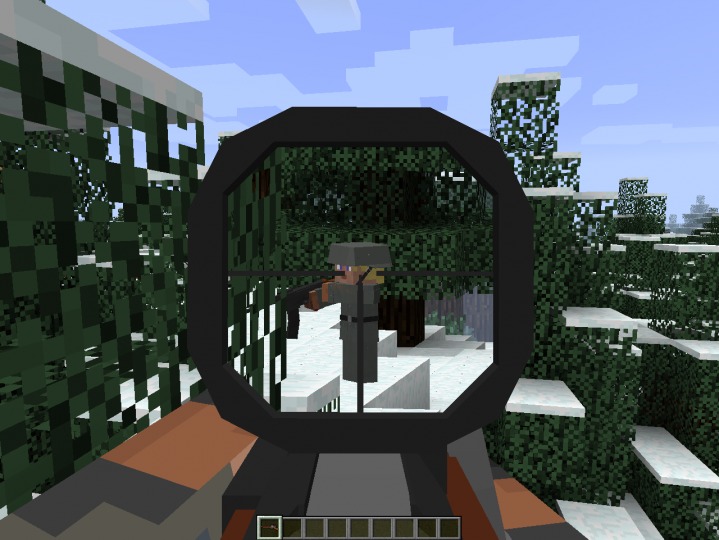
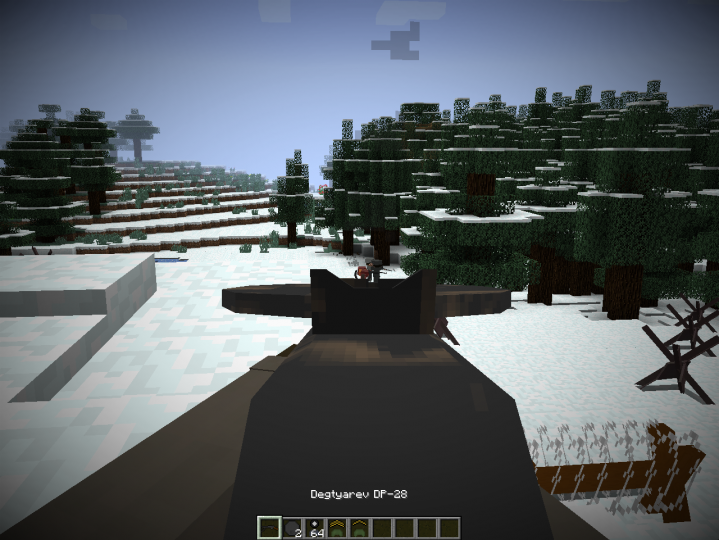
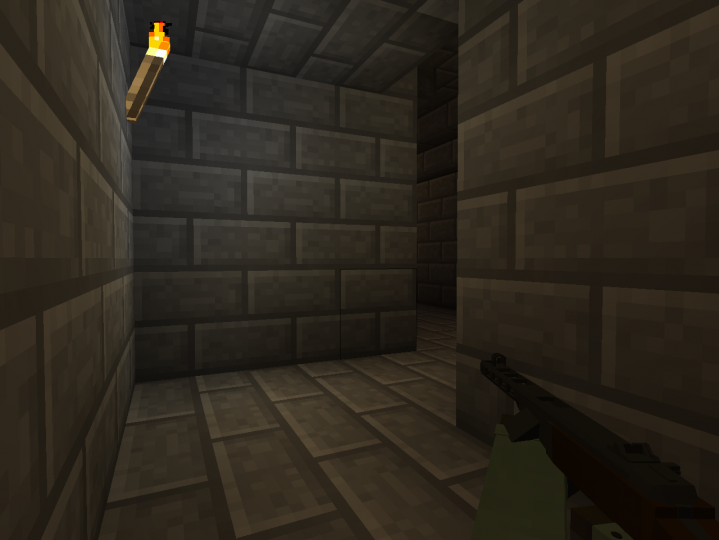
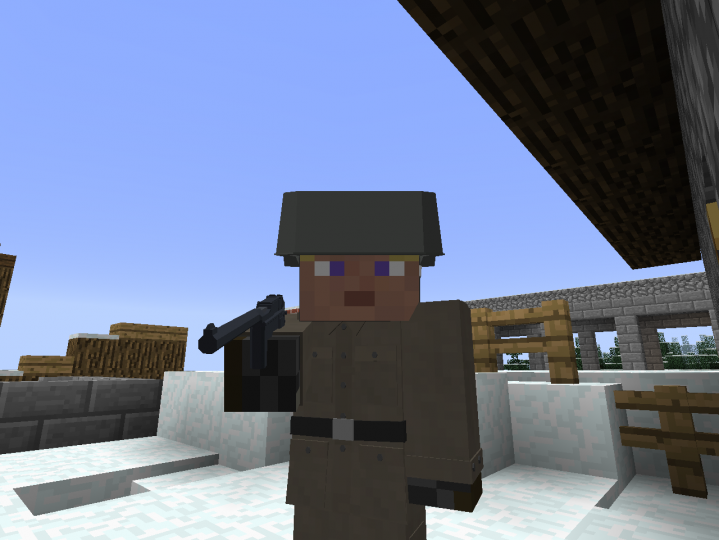
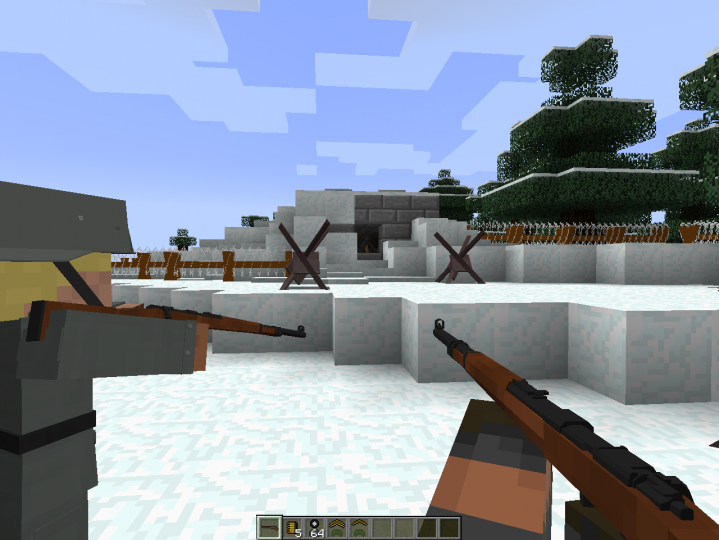
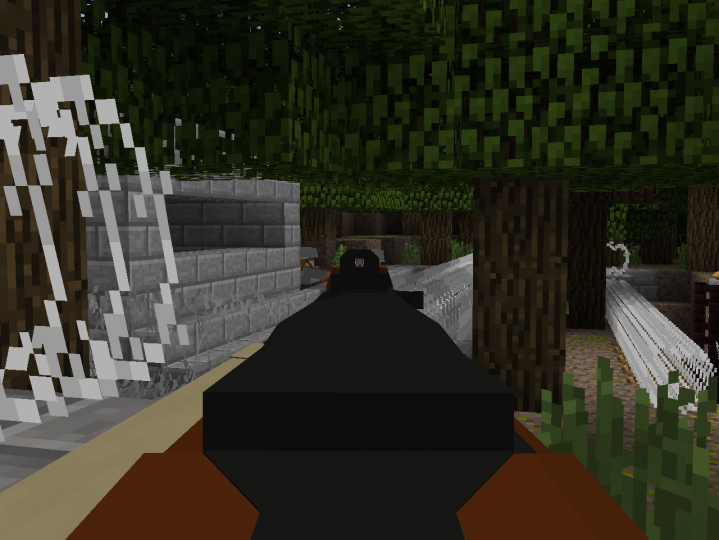
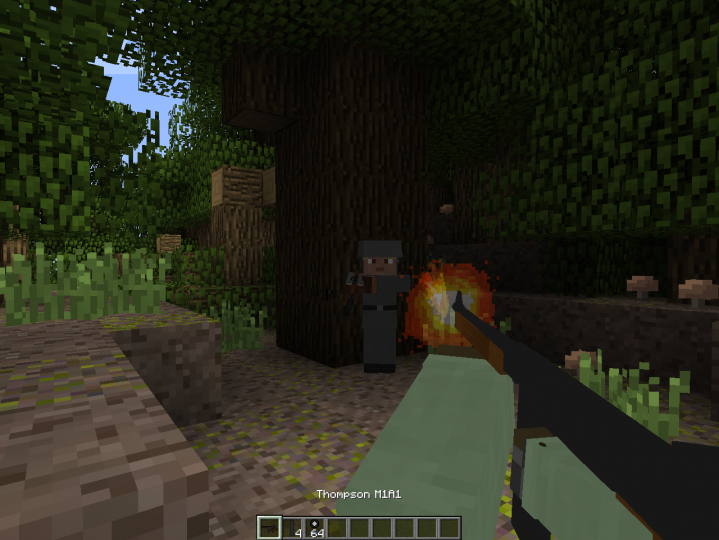
Call to Battle turns Minecraft into a World War II infantry-combat experience centered on historically researched weapons, nations, maps, and asymmetrical battles across different fronts. Its arsenal includes hundreds of modeled firearms, alongside grenades, rocket launchers, flamethrowers, mortars, artillery, knives, and other melee weapons; compatible guns can use attachments such as scopes, bayonets, and bipods. Combat behavior reflects weapon and hit characteristics: damage depends on caliber and where a shot lands, while guns have differing accuracy and recoil, and can become dirty or jam. Players can crouch or prone for greater weapon stability, deploy supported machine guns, and use melee attacks or dual wielding, trading handling advantages for slower movement or reduced control where applicable. Explosives serve different battlefield roles: grenades can clear rooms, satchel charges can breach bunker doors and destroy obstacles, and explosions can bring down buildings, sending dangerous debris crashing to the ground. Playable nations span major powers such as the United States, Germany, Japan, Britain, and the Soviet Union, as well as countries including France, Italy, Poland, Finland, Romania, Norway, Greece, and the Netherlands. Maps evoke battles and fronts from Normandy and Stalingrad to the Pacific jungles and African deserts, with modes including attacking or defending bases in Assault, competing over territory in Engagement and Warzone, and shifting objectives in Frontline. In the official server's team-based play, players can choose classes such as Rifleman, Assault, Technician, Support, and Marksman, then help capture or defend bases to unlock historical weapons. The mod also includes vehicles such as Jeeps and troop transports, with an accompanying vehicles addon required for that content.
Written from Modrinth and CurseForge . How we write it
In-game changes
Does not change the game's code directly.
Adds:
- 20 itemsColt M1911, Colt Magazine, Luger P08, Luger P08 Magazine, MP-38, MP-40, MP-41, MP-40 Magazine and 12 more. Items with their own name, not counting blocks, checked against the item files.
- 9 recipes
- 37 sounds
Counted from the files of the mod. Content made only in its code is not counted.
Keeps all of vanilla Minecraft's textures, models and sounds.
Details
- Creator
- Beardielover
- License
- All rights reserved
- Downloads
- 216K
- Created
- 13 Aug 2016
- Official pages
- Modrinth , CurseForge
Security
No harmful code found
We checked its files and read their code, without running it.
What it can do on your computer
- Starts other programs
- It can start another program on your computer. It can open a web link or a file.
Why we show this: a mod runs on your computer like any program, so harmful code in it can take your accounts or files. Our checks look for known signs of harm. They cannot prove that a file is harmless. In the grade: malware means no grade, and a Warning in a latest file for a recent Minecraft version lowers it.
How we checked
- FilesWe download the files from Modrinth or CurseForge and look at what is inside them and what their code can do, without running them. Fixed rules tell what is harmful.3 latest files: the newest file for each Minecraft version and loader. The answer above is about the one for a recent version. Recent versions: those released in the last 2 years, plus 1.20.1 and 1.21.1, among the most played in modpacks. See each file in Releases
- Their codeWe turn the code of the files back into readable code and follow what it does, without running it. This shows what it downloads, what it sends and where your login goes.Read without running it
- Author on ModrinthThe disclosure form on Modrinth, where the author declares that the project reads or edits things on your system outside the game. Since 13 Aug 2026, Modrinth's rules require it when this applies.Nothing declared about your system outside the game.
- Looked for, not foundWe looked for these in the file and did not find them.The internet, folders outside the game, updating itself, the webcam or microphone, an AI service.
Privacy
We found nothing it sends
We read its code without running it: it contacts no web address while you play.
Its files for older Minecraft versions (1.12.2) also send your player name.
Why we show this: a mod can send things about you over the internet, like your player name or your login. Contacting an address to check for updates or download files sends nothing about you. Not in the grade: sending data can be normal for what a mod does.
How we checked
- Files readWe read the code without running it. We list each web address the code contacts while you play, and what it sends. Code that is never used is left out.The code of its one file, for recent Minecraft versions. See each file in Releases
- Author on ModrinthThe disclosure form on Modrinth, where the author declares crash reports, usage data and advertisements. Since 13 Aug 2026, Modrinth's rules require it when a project collects data on its users or shows advertisements.Nothing declared about crash reports, usage data or advertisements.
AI
No sign that AI was used to make it
We looked for AI tools in its texts, files, images and sounds and found none.
No sign of AI in the game
We found no AI service, AI library or AI model file in its code.
Why we show this: some players and servers avoid projects made with AI, and AI in the game can send what you write to an online service. Not in the grade: using AI does not tell whether a project works well or is kept up to date.
How we checked
- Author on ModrinthThe disclosure form on Modrinth. Since 13 Aug 2026, Modrinth's rules require it when a substantial part of the code is AI output, when an asset is mainly AI output, or when the project or its page relies on generative AI.No AI content or AI features declared.
- Description and changelogsThe description, project page and newest changelogs: sentences saying an AI tool was used, and text pasted from an AI chat.Nothing found20 of 28 changelogs read
- Its filesCredits and texts in the files you download that name an AI tool.Nothing found
- Images in its filesHidden data in the images of the files you download, where AI image tools write their name and settings.Nothing found3,035 images read
- Sounds in its filesThe tags of the sound files in the files you download, where some AI music tools write their name.Nothing found40 of 1,159 sounds read
- Code of the modThe code and files of the mod, read without running it: addresses of AI services, AI libraries, AI model files and a place for your own AI key.No AI service, AI library or AI model file31 code files read
Compatibility
See all 57 filesPoint at or tap a version to see its loaders.
Related projects
Projects that need Call to Battle to work.
 Call to Battle Vehicles AddonEMod292K downloads
 Call to Battle Ammo Boxes AddonEMod89K downloads
 Battle DefendersEMod78K downloads
 Stranger Things - The Upside DownFMod68K downloads
 Call to Battle Minimap AddonEMod59K downloads
 Call to Battle - Franco-Prussian War AddonEMod42K downloads
 Call to Battle - Revolutionary War AddonEMod38K downloads
 More Ender PearlsEMod36K downloads
 Call to Battle Legacy Music AddonFMod999 downloads
Modpacks using this project
Find modpacks with itModpacks that include Call to Battle in at least one of their versions, most downloaded first.
 The best WW2 modpack47K downloadslast version with it 2 Dec 2017
 Dogpack- All the dogs!26K downloadslast version with it 5 Dec 2017
 Stranger Things Experience25K downloadslast version with it 16 Aug 2025
 Call to Battle WW219K downloadslast version with it 30 Aug 2025
 Call to Battle 3 - World War 2 (by Stoondler45)6K downloadslast version with it 9 Apr 2025
 After the Apocalypse (discontinued)2.8K downloadslast version with it 22 Jan 2019
 G&G Zombies Catcher2.5K downloadslast version with it 26 Feb 2023
 hunting2.1K downloadslast version with it 14 Aug 2020
 Iron Front829 downloadslast version with it 30 Oct 2025
 RQN Modded SurvivalGames628 downloadslast version with it 25 Sep 2016
Latest files
The newest file for each Minecraft version and loader. The files for recent versions come first. Recent versions: those released in the last 2 years, plus 1.20.1 and 1.21.1, among the most played in modpacks.
57 releases
Quick fixes
In the last 2 years, 8 releases needed a quick fix: a new release within 3 days to fix a problem. This lowers the grade by 7 points.
See them, newest first
- 3.10.3Fixed Type 4 Jungle Scope - Fixed VK 98 ZF-41 Scope - Fixed…
- 3.9Fixed Type 4 - Fixed Type 4 (Jungle) - Fixed Seitengewehr…
- 3.6.1Fixed crash when pressing O - Adjusted crafting table
- 3.5.4Fixed issues with M1917
- 3.5.3-Fixed a crash with the Type 2 SMG -Fixed a crash with the…
- 3.3.1Fixed visual issue when rendering belt-fed mgs
- 3.2.2Fixed multiple visual glitches
- 3.1.0Fixed Kar98 bayonet being invisible - Fixed model issues on…