
Attributification [Attribute Unification]
ModCombines similar attributes from different mods to avoid duplicates.
Why gradeD
How grades workStrengths
Points lost
- Many modpacks removed it−8 points
- First release only 8 months ago−5 points
- No release in 7 months−4 points
- Releases in only 3 of the last 24 months−4 points
- Releases replaced within 3 days to fix a problem−4 points
- Under 5 million downloads−1 point
All 11 criteria
Maintenance
8 points lost19 / 27Last releaseHow long ago the newest file came out, or an existing file was marked as working on a new Minecraft version.7 months ago (9 Apr 2026) 8 / 12Supports popular versionsWhether the project has a file for a Minecraft version that 15% or more of the popular mods updated in the last 6 months also support. A version many modpacks use, like 1.20.1 or 1.21.1, also counts after a release in the last 12 months.1.21.1 on Fabric and NeoForge, 1.20.1 on Forge. 15% or more of the popular mods updated in the last 6 months also have files for 1.21.1. Latest Minecraft: 26.3. 9 / 9Regular releasesIn how many of the last 24 months a new file came out. Full points at 8 months.Releases in 3 of the last 24 months 2 / 6Stability
12 points lost10 / 22Removed from modpacksHow many modpacks removed it in a later version of the pack. We can only see this in modpacks with two or more versions. A pack that swaps it for another edition of the same project, or that is rebuilt from scratch, does not count.7 of the 20 modpacks with two or more versions removed it in a later one (35%) See the 7 modpacks2 / 10Quick fixesHow often a release needed a quick fix: a new release within 3 days to fix a problem in it.2 of its 8 releases in 2 years needed a quick fix (25%) See the 2 releases3 / 7Known conflictsHow many projects say they do not work with it, compared with how widely it is used. Packs, small projects, forks, ports, add-ons, alternatives and old versions do not count.None 5 / 5Transparency
Full points10 / 10Source codeWhether the project page links to its source code, so anyone can read what it does.GitHub · kcorp12/attributification 7 / 7Place to report problemsWhether the project page links to a place where players can report problems: an issue tracker.GitHub issues · kcorp12/attributification 3 / 3Popularity
1 point lost3 / 4DownloadsDownloads on Modrinth and CurseForge. Full points from 5 million.25,006 3 / 4Track record
5 points lost3 / 8AgeHow long the project has existed. It counts less when no new file came out recently.8 months, 17 releases 3 / 8Security
PassedFile checksThis check adds no points. It can only take points away.Our checks found nothing harmful in all 4 latest files for recent Minecraft versions. See Security
44.6 of the 71 points that apply = 63 out of 100. The points above are rounded to whole numbers.
Images
About
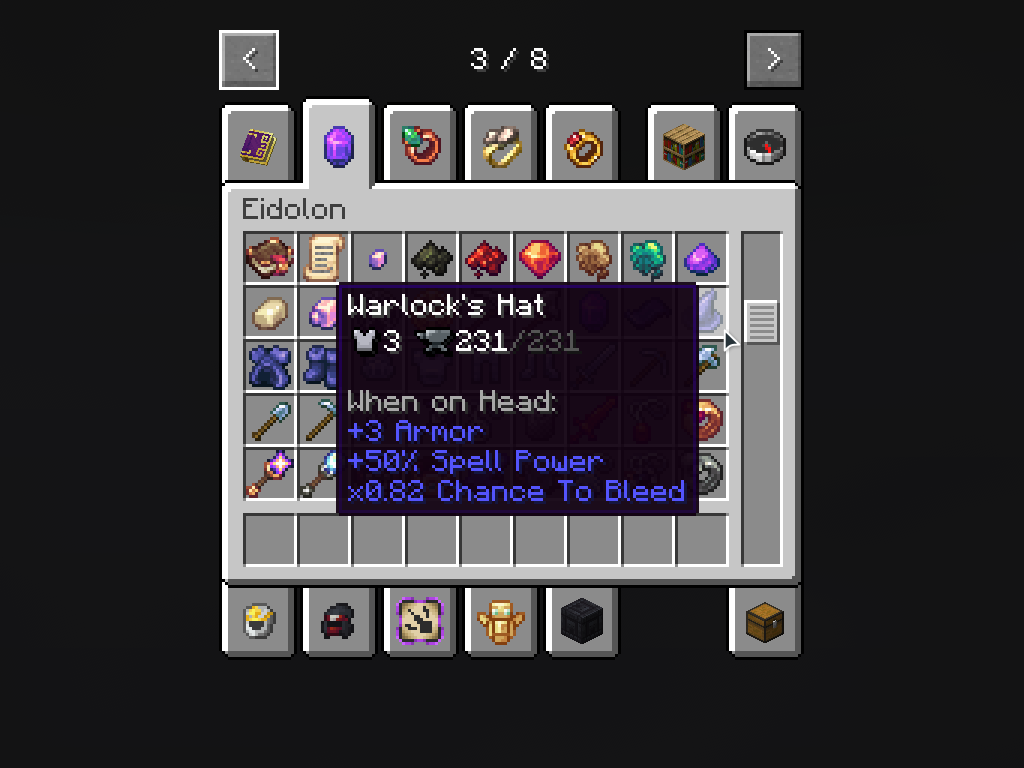
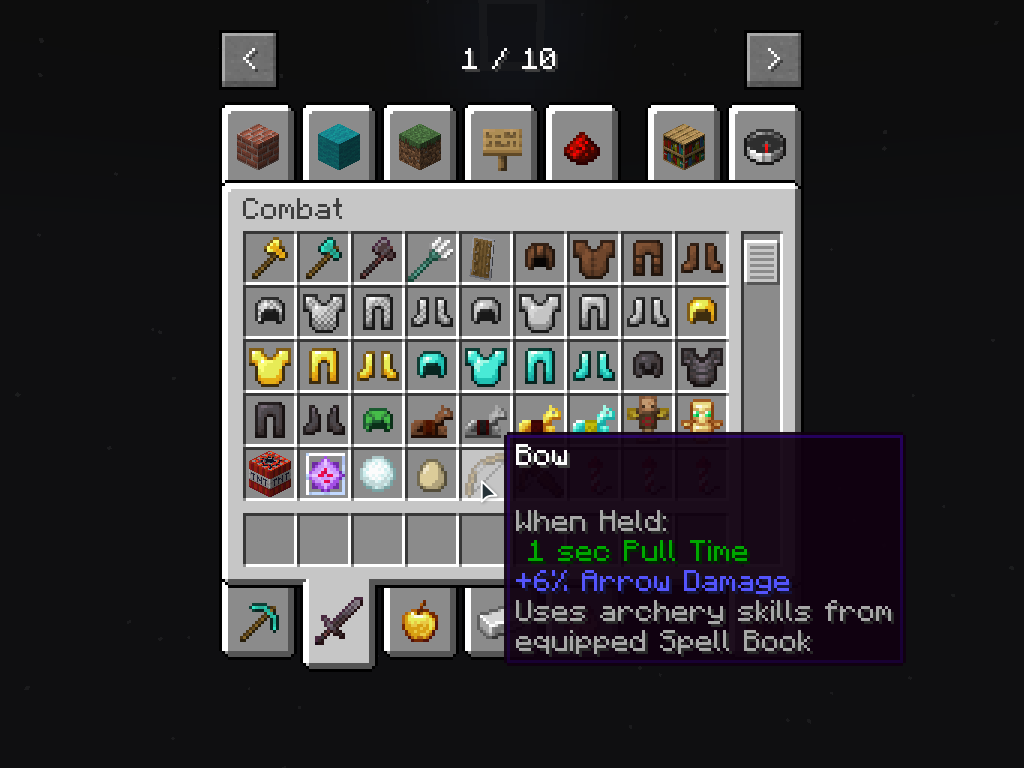
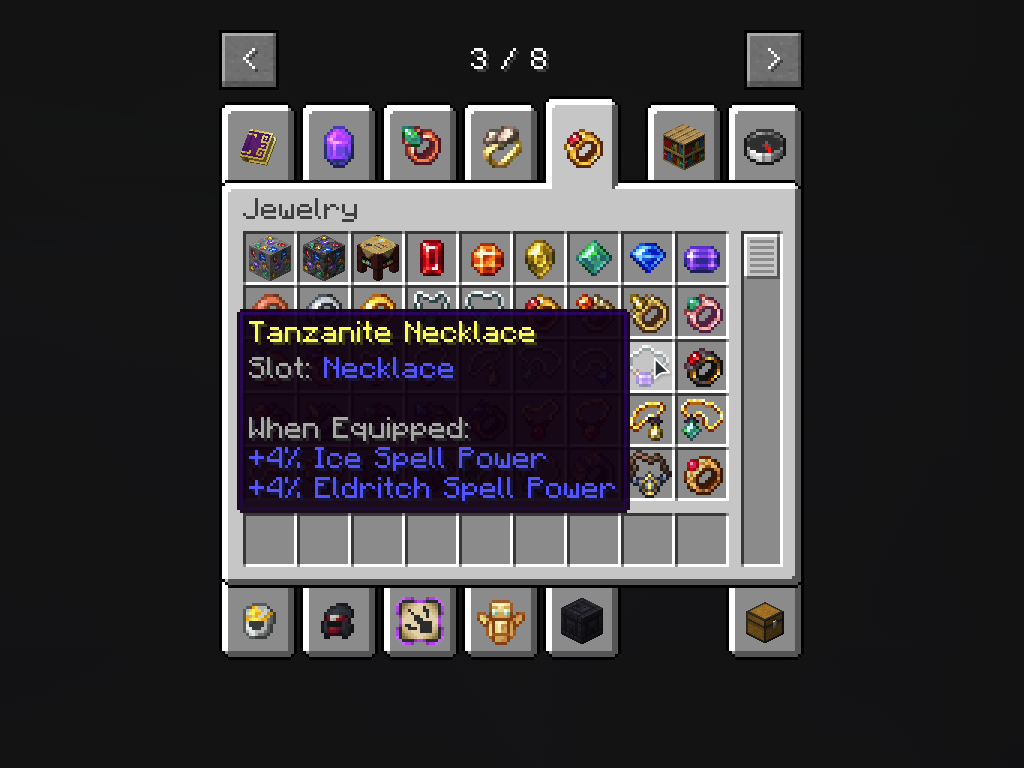
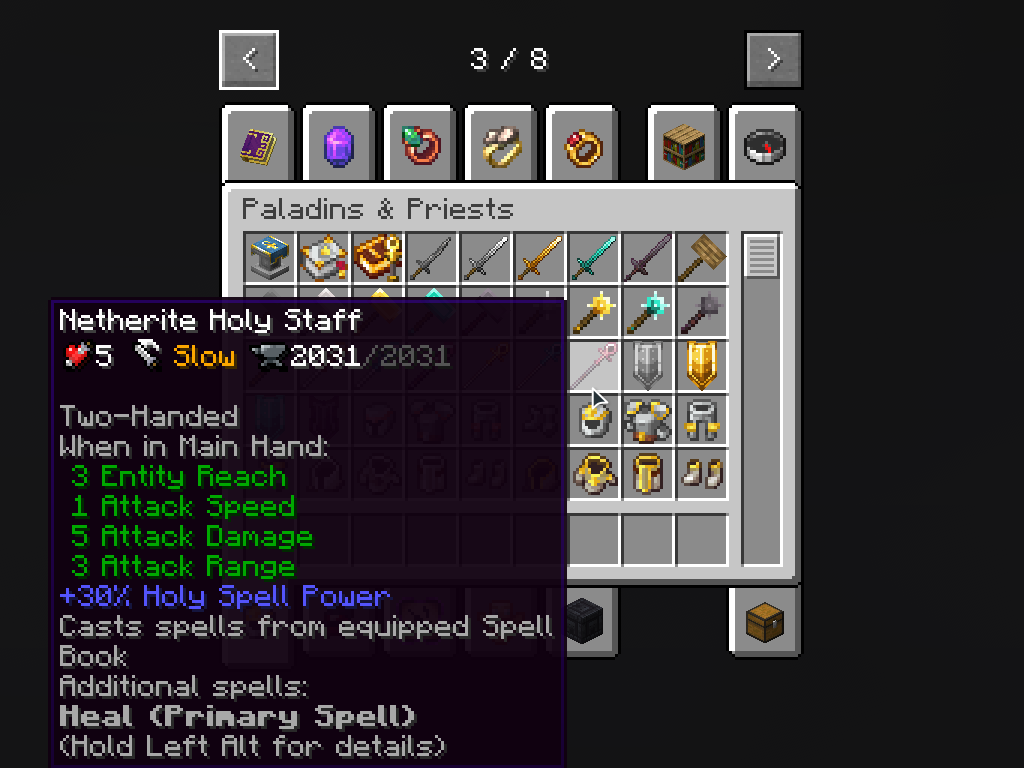
Attributification is a compatibility mod that unifies equivalent attributes from different mods, helping prevent duplicate effects and improve cross-mod compatibility. It converts source attribute modifiers to target attributes using configurable equivalence ratios, and can also transform operations such as ADDITION into MULTIPLY_BASE or MULTIPLY_TOTAL when the attributes use different scales. Mappings can use simple static registry aliases or reloadable dynamic conversions; dynamic mappings can include fallback targets when a preferred mod is absent. For example, a spell-power earth modifier can be scaled into geomancy spell power, with a fallback to nature spell power if the primary target mod is unavailable. The mod can display virtual source values based on the target attribute, redirect source lookups directly, or fully replace a source attribute to prevent both versions from stacking. It includes mappings for magic and spell mods such as Iron's Spells 'n Spellbooks, Spell Power Attributes, Ars Nouveau, Eidolon, Goety and Wizard's Reborn, as well as attribute libraries including Apothic Attributes, Obscure API, Turtleboi's Core Library, GTBC's SpellLib/API and Lodestone. An in-game visual editor lets users configure mappings, choose from registered attributes, preview changes and set custom mappings for mods that use Minecraft's standard attribute system; server configuration also syncs to connected clients.
Written from Modrinth , CurseForge and the GitHub README . How we write it
In-game changes
Changes the game's code in 2 areas: Mobs and their behaviorChanges 3 game code files in this area: mobs, animals, villagers, projectiles and how they move and act. and Inventory and itemsChanges 1 game code file in this area: items, chests and other containers, crafting and enchanting..
Adds no new blocks, items or other content.
Keeps all of vanilla Minecraft's textures, models and sounds.
Often used with it
See all 30Details
- Creator
- UtherHel
- License
- MIT License
- Downloads
- 25K
- Created
- 18 Feb 2026
- Official pages
- Modrinth , CurseForge
- Links
- Source code , Issues
Security
No harmful code found
We checked its files and read their code, without running it.
Why we show this: a mod runs on your computer like any program, so harmful code in it can take your accounts or files. Our checks look for known signs of harm. They cannot prove that a file is harmless. In the grade: malware means no grade, and a Warning in a latest file for a recent Minecraft version lowers it.
How we checked
- FilesWe download the files from Modrinth or CurseForge and look at what is inside them and what their code can do, without running them. Fixed rules tell what is harmful.4 latest files: the newest file for each Minecraft version and loader. All 4 are for recent versions. Recent versions: those released in the last 2 years, plus 1.20.1 and 1.21.1, among the most played in modpacks. See each file in Releases
- Their codeWe turn the code of the files back into readable code and follow what it does, without running it. This shows what it downloads, what it sends and where your login goes.Read without running it
- Author on ModrinthThe disclosure form on Modrinth, where the author declares that the project reads or edits things on your system outside the game. Since 13 Aug 2026, Modrinth's rules require it when this applies.Nothing declared about your system outside the game.
- Looked for, not foundWe looked for these in the file and did not find them.The internet, folders outside the game, other programs, updating itself, the webcam or microphone, an AI service.
Privacy
We found nothing it sends
We read its code without running it: it contacts no web address while you play.
Why we show this: a mod can send things about you over the internet, like your player name or your login. Contacting an address to check for updates or download files sends nothing about you. Not in the grade: sending data can be normal for what a mod does.
How we checked
- Files readWe read the code without running it. We list each web address the code contacts while you play, and what it sends. Code that is never used is left out.The code of all 4 files, for recent Minecraft versions. See each file in Releases
- Author on ModrinthThe disclosure form on Modrinth, where the author declares crash reports, usage data and advertisements. Since 13 Aug 2026, Modrinth's rules require it when a project collects data on its users or shows advertisements.Nothing declared about crash reports, usage data or advertisements.
AI
No sign so far that AI was used to make it
We looked for AI tools in its description, files and images and found none.
We have not read its changelogs and code history yet.
No sign of AI in the game
We found no AI service, AI library or AI model file in its code.
Why we show this: some players and servers avoid projects made with AI, and AI in the game can send what you write to an online service. Not in the grade: using AI does not tell whether a project works well or is kept up to date.
How we checked
- Author on ModrinthThe disclosure form on Modrinth. Since 13 Aug 2026, Modrinth's rules require it when a substantial part of the code is AI output, when an asset is mainly AI output, or when the project or its page relies on generative AI.No AI content or AI features declared.
- Code historyThe public code on GitHub: who made each change, credit lines such as "Co-authored-by", and its files.Not read yet
- Description and changelogsThe description, project page and newest changelogs: sentences saying an AI tool was used, and text pasted from an AI chat.Nothing found in the descriptionChangelogs not read yet
- Its filesFiles that AI coding tools leave behind (like AGENTS.md), and the texts inside the files you download.Nothing found
- Images in its filesHidden data in the images of the files you download, where AI image tools write their name and settings.Nothing found1 image read
- Code of the modThe code and files of the mod, read without running it: addresses of AI services, AI libraries, AI model files and a place for your own AI key.No AI service, AI library or AI model file21 code files read
Compatibility
See all 17 filesPoint at or tap a version to see its loaders.


Modpacks using this project
Find modpacks with itModpacks that include Attributification [Attribute Unification] in at least one of their versions, most downloaded first.
 Ascendra666K downloadslast version with it 26 Apr 2026
 All the Magic - Arcana201K downloadslast version with it 26 Jul 2026
 Changed +57K downloadslast version with it 11 Oct 2026
 Mystic's Monstrosity - Greedy Edition30K downloadslast version with it 14 Mar 2026
 SLG: Best of Terramity8.7K downloadslast version with it 28 Jul 2026
 Bread's Modern Sandbox (Cosmotic)1.7K downloadslast version with it 13 Mar 2026
 Maybe's Tech World1.6K downloadslast version with it 27 Jul 2026
 Call of Combat1.3K downloadslast version with it 5 Apr 2026
 Realms of Simia1.2K downloadslast version with it 11 Apr 2026
 Baba Yaga's Cauldron of Realms1K downloadslast version with it 22 Aug 2026
Often in the same modpacks
Mods that modpacks often add together with Attributification [Attribute Unification]. Share: how many of the modpacks with Attributification [Attribute Unification] also have that mod.
 AttributeFixAModin 100% of the modpacks with Attributification [Attribute Unification]
 Iron's Spells 'n SpellbooksAModin 86% of the modpacks with Attributification [Attribute Unification]
 AllTheLeaks (Memory Leak Fix)AModin 77% of the modpacks with Attributification [Attribute Unification]
 sparkAModin 77% of the modpacks with Attributification [Attribute Unification]
 Sophisticated StorageAModin 73% of the modpacks with Attributification [Attribute Unification]
 RelicsAModin 68% of the modpacks with Attributification [Attribute Unification]
 Loot IntegrationsAModin 68% of the modpacks with Attributification [Attribute Unification]
 L_Ender's CataclysmBModin 68% of the modpacks with Attributification [Attribute Unification]
 ApotheosisAModin 68% of the modpacks with Attributification [Attribute Unification]
 MmmMmmMmmMmmAModin 68% of the modpacks with Attributification [Attribute Unification]
Latest files
The newest file for each Minecraft version and loader. The files for recent versions come first. Recent versions: those released in the last 2 years, plus 1.20.1 and 1.21.1, among the most played in modpacks.
17 releases
Quick fixes
In the last 2 years, 2 releases needed a quick fix: a new release within 3 days to fix a problem. This lowers the grade by 4 points.
See them, newest first
Quick fixesReleases followed within 3 days by a new release that fixes a problem in them.2
- attributification-fabric-2.0.1.jarFixed - Fixed crash on startup: removed incompatible…
- attributification-forge-1.0.2.jar…(equivalence must be specified manually) Fixed - Fixed potential StackOverflowError caused by registry…